
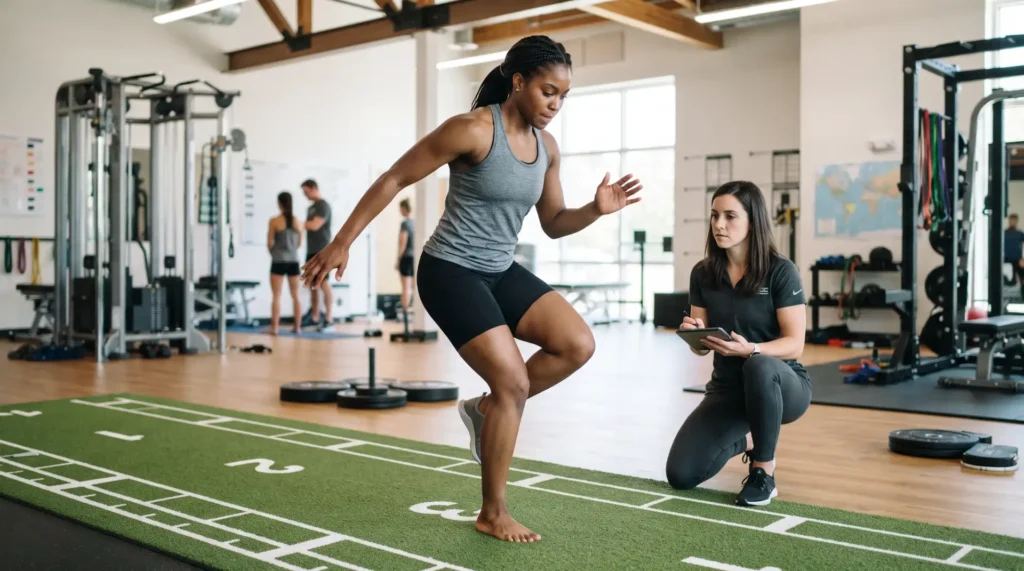
Returning to a sport after a serious injury requires more than waiting for pain to disappear. Return to sport testing examines strength, mobility, movement quality, endurance, confidence, and sport-specific performance. These results help the athlete and medical team decide whether the body can tolerate progressively greater athletic demands.
A surgeon may confirm that repaired tissue has healed adequately. A physical therapist may find that an athlete has regained basic mobility. Neither finding automatically means the athlete is prepared for full-speed practices or competition.
Sports place demands on the body that ordinary daily activities rarely reproduce. An athlete may walk without pain but struggle to decelerate from a sprint. Another may have normal strength during a controlled exercise but lose knee stability while landing under fatigue. Return to sport testing helps identify these differences.
The process is not one universal test or a simple pass-or-fail examination. It is a collection of assessments selected for the athlete, injury, position, age, and level of competition. Testing often occurs more than once as rehabilitation progresses.
What Is Return to Sport Testing?
Return to sport testing is a structured assessment of an athlete’s readiness to resume training and competition after an injury. Healthcare professionals use clinical measurements and performance tasks to evaluate whether the athlete has regained the physical and psychological abilities needed for a particular sport.
The process may include measurements of joint motion, muscle strength, power, balance, agility, cardiovascular fitness, and movement control. It can also include questionnaires that explore pain, confidence, fear of reinjury, and perceived function.
Testing should reflect what the athlete actually does during competition. A distance runner needs the capacity to sustain repeated loading across many miles. A basketball player needs to jump, land, accelerate, stop, and change direction. A baseball pitcher needs shoulder mobility, rotational strength, throwing endurance, and control across repeated pitches.
An evaluation that ignores these demands may provide an incomplete picture. An athlete who performs well during basic clinic exercises may still have limitations when speed, reaction, contact, or fatigue enters the activity.
Return to sport testing is therefore part of a broader progression. The athlete first regains function for everyday activities. Rehabilitation then introduces running, jumping, throwing, cutting, or other relevant tasks. Testing helps determine whether the athlete is prepared to move from controlled rehabilitation into practice and eventually competition.
Athletes can learn more about the broader recovery process in The Role of Physical Therapy in Athletic Injury Recovery.
Why Time Alone Is Not Enough
Recovery timelines give athletes and clinicians a general framework. However, the number of weeks or months since an injury cannot show whether the athlete has restored adequate strength, control, or confidence.
Two athletes with the same injury may progress differently. Their recovery can be affected by injury severity, surgical procedures, age, training history, rehabilitation access, previous injuries, sleep, nutrition, and other health factors.
A calendar-based decision may overlook problems that remain after tissue healing. These problems can include muscle weakness, reduced joint motion, poor balance, movement compensation, and limited tolerance for repeated activity.
For example, an athlete may reach a common postoperative milestone after anterior cruciate ligament reconstruction but still demonstrate a considerable strength difference between the legs. The athlete may also shift weight away from the recovering side during a landing.
The American Orthopaedic Society for Sports Medicine describes modern ACL return-to-play decisions as a combination of clinical, functional, and psychological measurements. This approach recognizes that elapsed time is only one part of readiness.
Time still matters because biological tissue needs an opportunity to heal. Testing does not replace that process. Instead, objective measurements add information about what the athlete can currently do and where further rehabilitation may be appropriate.
Clinical Examination Before Performance Testing
Return to sport testing commonly begins with a clinical examination. A physician, physical therapist, or athletic trainer may assess symptoms, healing, joint stability, swelling, range of motion, and basic function.
Persistent swelling may indicate that the joint is not tolerating its current workload. Pain during ordinary movement can also affect performance and create compensations elsewhere in the body.
Range of motion is another important consideration. An athlete who lacks full knee extension may change their walking, running, and landing mechanics. Limited ankle mobility can affect squatting and deceleration. Restricted shoulder rotation may influence throwing mechanics.
Clinical examination also provides an opportunity to discuss symptoms that do not appear during a brief physical test. These may include instability, catching, numbness, dizziness, headaches, or pain that develops several hours after activity.
Return testing should not be used to push through unresolved warning signs. A healthcare professional can determine whether a symptom reflects normal rehabilitation stress or a concern that requires further evaluation.
The article When Should You Seek Medical Attention for a Sports Injury? explains additional signs that may warrant medical assessment.
Strength Testing
Strength is one of the most common components of return to sport testing. Serious injuries and periods of reduced activity can cause substantial losses in muscle size and force production.
A clinician may use manual resistance, handheld equipment, weight machines, force plates, or isokinetic devices to measure strength. The method depends on the injury, available equipment, and the muscle group being examined.
Lower-extremity testing may evaluate the quadriceps, hamstrings, calves, hips, and supporting muscles around the pelvis. Upper-extremity testing may examine the shoulder, elbow, wrist, and muscles that control the shoulder blade.
Clinicians often compare the injured side with the uninjured side. This calculation is commonly called limb symmetry. A small difference may support progression, while a larger difference may indicate a need for additional strengthening.
Symmetry has limits. The uninjured side may also lose strength during a long rehabilitation period. An athlete could appear symmetrical because both sides are below their previous capacity. Preseason baseline measurements, sport-specific norms, and comparisons with body weight may add useful context.
Strength should also be considered alongside movement quality. An athlete may produce acceptable force during a controlled machine test but struggle to use that strength during a fast landing or unexpected change of direction.
Power and Hop Testing
Power describes how quickly an athlete can produce force. It plays an important role in sprinting, jumping, throwing, tackling, and rapid changes of direction.
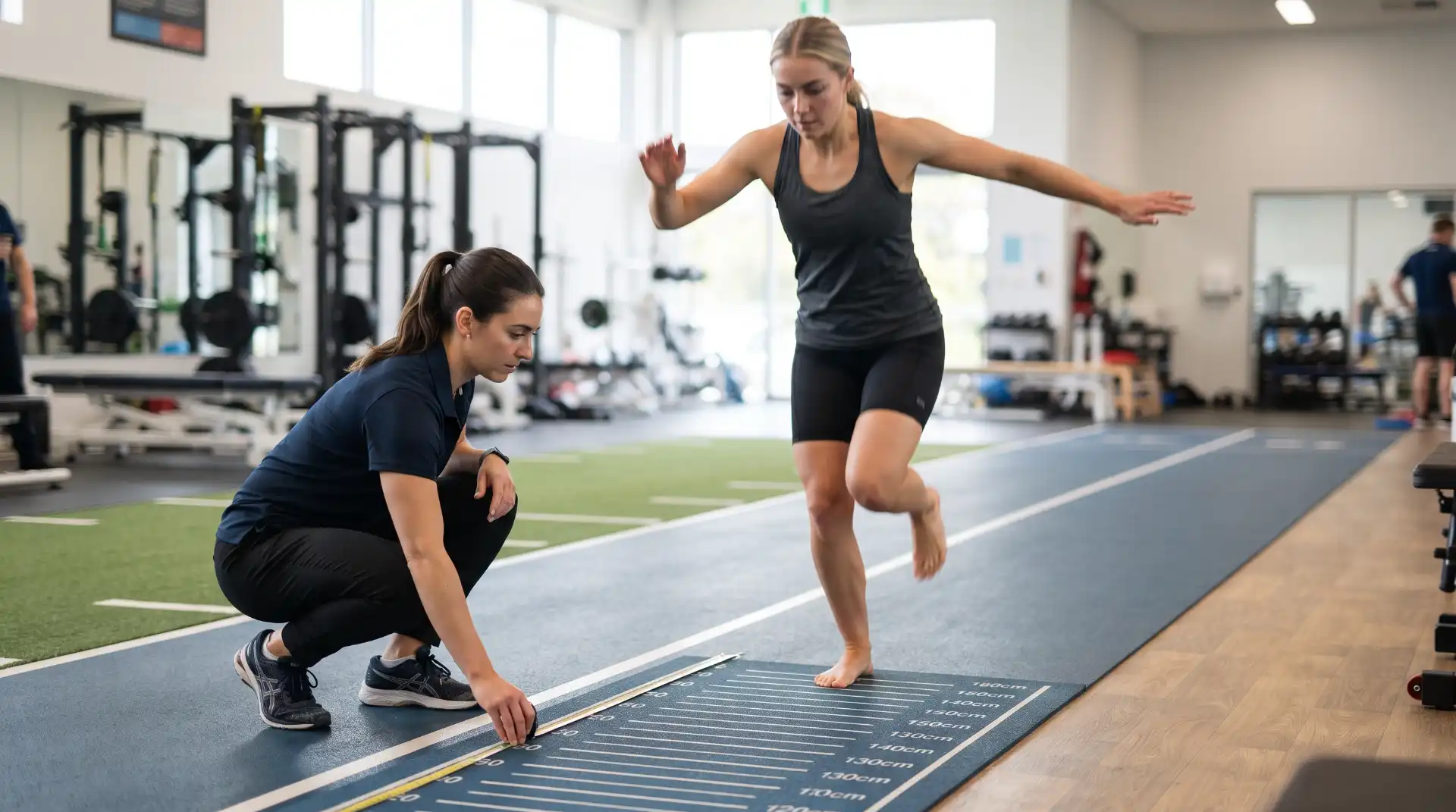
Hop tests are frequently used after serious lower-extremity injuries. An athlete may complete a single hop for distance, several consecutive hops, a timed hop, or a side-to-side hopping task.
These assessments provide information about force production, balance, confidence, and the ability to absorb impact. Clinicians may compare distance or time between sides, but the number alone does not tell the entire story.
Movement during the test also matters. An athlete may reach a similar distance with both legs while displaying poor control on the recovering side. The knee may move inward, the trunk may lean excessively, or the landing may require an extra step.
The athlete’s response after testing is equally relevant. Pain, swelling, stiffness, or instability later that day may show that the current workload exceeded the joint’s tolerance.
Upper-extremity athletes may complete medicine-ball throws, push-up variations, closed-chain stability tests, or sport-specific power assessments. A baseball player’s testing may differ greatly from testing for a swimmer, wrestler, or tennis player.
Balance and Proprioception
Proprioception is the body’s awareness of joint position and movement. Injuries involving ligaments, joints, or the nervous system can disrupt this ability.
Balance testing may begin with controlled single-leg standing. More advanced tests add reaching, unstable surfaces, visual challenges, catching tasks, or external distractions.
An athlete may balance successfully in a quiet clinic but struggle when reacting to another player. Progression can therefore move from predictable tasks toward situations that require quick decisions.
Balance has particular importance after ankle sprains, knee injuries, and lower-extremity surgery. Poor control can affect the athlete’s ability to land, cut, or maintain position during contact.
The purpose is not to create the most difficult drill possible. The goal is to identify whether the athlete can maintain appropriate control as the demands become more similar to the sport.
Movement Quality and Sport-Specific Testing
A serious injury can change movement habits. Some changes are obvious, such as limping. Others appear only during faster or more complex activities.
Clinicians may observe squats, step-downs, running mechanics, jumping, landing, acceleration, deceleration, and cutting. Video analysis or force plates can provide additional measurements when available.
Movement quality includes alignment, balance, trunk position, force absorption, timing, and coordination. It also includes how consistently the athlete maintains those features across repeated attempts.
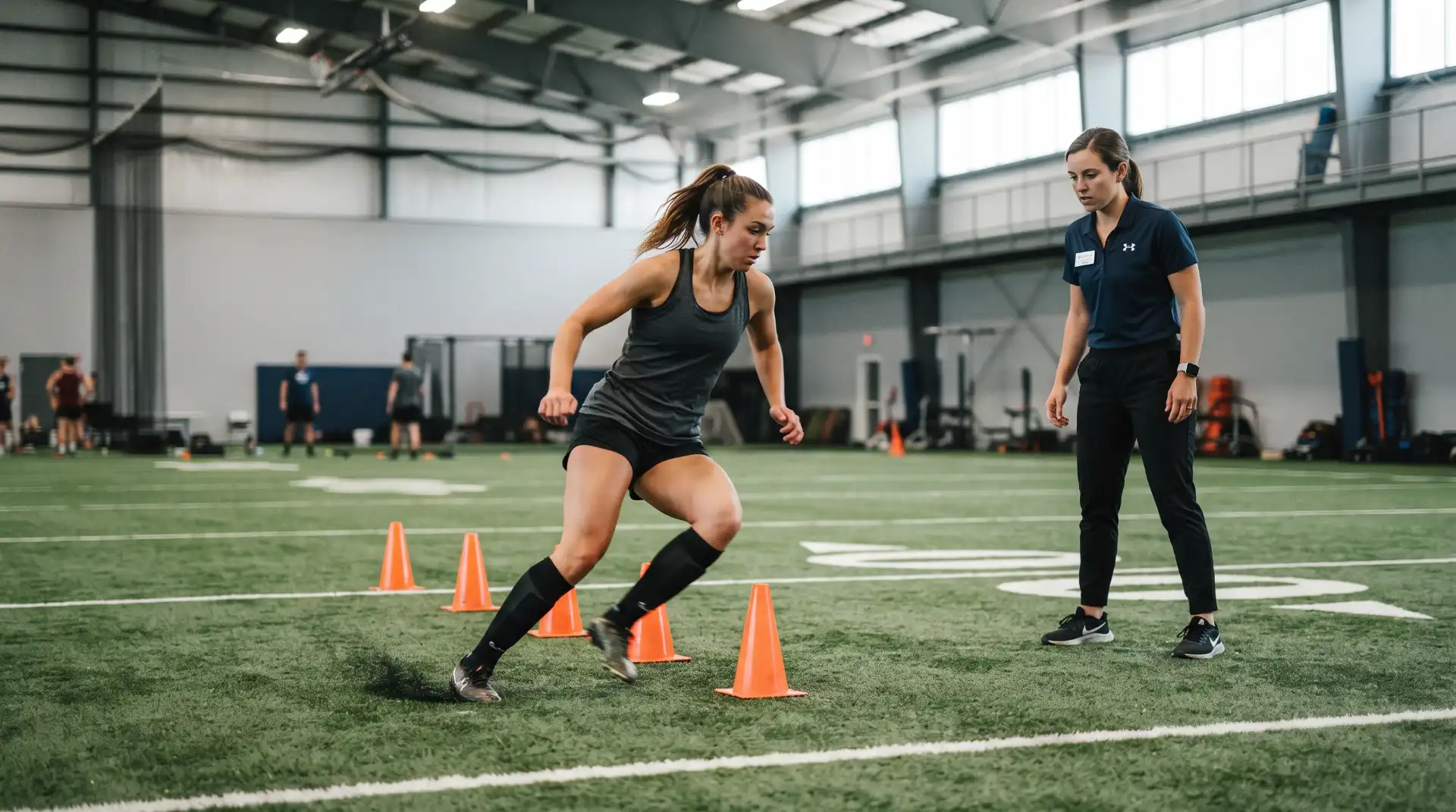
Sport-specific testing should reflect the athlete’s position and competitive environment. A soccer player may complete planned and reactive cutting drills. A football lineman may practice short accelerations and contact-related movements. A gymnast may need to demonstrate control during progressive tumbling or landing tasks.
For a throwing athlete, testing can include progressive throwing distance, speed, accuracy, volume, and recovery between sessions. A swimmer may need to tolerate repeated strokes and turns. A skier may require strength and control through prolonged, variable loading.
Testing normally begins in a controlled setting. Speed, complexity, fatigue, and external reactions can then be added gradually. This progression gives the medical team opportunities to observe the athlete before full competition introduces less predictable forces.
A return test should not focus only on the athlete’s best attempt. Sport requires repeated performance. Consistency across several efforts provides more useful information than one successful movement.
Testing Under Fatigue
Many injuries occur late in a practice, game, or race when fatigue affects timing and control. An athlete who moves well while fresh may display different mechanics after repeated efforts.
Fatigue testing can include repeated sprints, jumps, agility drills, or sport-specific work. The clinician may monitor whether speed declines, technique changes, pain develops, or the recovering limb begins to receive less load.
This stage must be introduced carefully. The athlete needs an adequate foundation before completing demanding fatigue protocols.
Cardiovascular conditioning also matters. An athlete who becomes exhausted much earlier than teammates may have difficulty maintaining proper mechanics. Conditioning can decline during rehabilitation even when the injured body part is progressing well.
Return testing should therefore examine both local tissue capacity and whole-body fitness. Passing an isolated strength test does not automatically show readiness for a full practice.
Psychological Readiness and Fear of Reinjury
Physical measurements are only part of the decision. A serious injury can affect an athlete’s confidence, identity, motivation, and sense of safety.
Some athletes hesitate during tasks that resemble the original injury. A basketball player may avoid landing on the recovering leg. A soccer player may slow down before cutting. A pitcher may protect the shoulder by changing throwing mechanics.
Fear does not mean an athlete lacks commitment. It can be a natural response after surgery, pain, or a frightening injury.
Healthcare professionals may use validated questionnaires and direct conversation to evaluate psychological readiness. The ACL Return to Sport after Injury scale is one example used after ACL injuries. Other tools may be selected for different conditions.
Graded exposure can help an athlete rebuild confidence. The athlete first practices a movement in a controlled setting. Speed, unpredictability, and competitive pressure can then increase as tolerance improves.
Mental health support may also be appropriate. A sports psychologist or other qualified professional can address persistent fear, anxiety, low mood, or difficulty adjusting to time away from sport.
Confidence should not replace objective physical testing. Likewise, strong test results should not cause the medical team to ignore significant hesitation. The two areas need to be considered together.
Workload Tolerance and the Return to Practice
Passing a testing session does not mean an athlete should immediately resume unrestricted competition. The next phase often involves progressive participation in practice.
A graduated plan may begin with individual drills. The athlete can then join selected team activities, noncontact practice, controlled contact, and eventually full practice.
The appropriate progression depends on the sport and injury. Practice provides information that clinic testing cannot fully reproduce. It exposes the athlete to teammates, decisions, equipment, coaching demands, and repeated sport-specific work.
Training load may be measured through minutes, repetitions, distance, throwing volume, sprint efforts, or perceived exertion. Wearable devices may provide additional information, although technology should support clinical judgment rather than replace it.
The athlete’s response during the following 24 hours can guide progression. Increased pain, swelling, stiffness, or loss of function may signal that the workload advanced too quickly.
Athletes looking for a broader recovery overview can read How to Safely Return to Your Sport After an Injury.
Concussion Requires a Separate Return Protocol
Musculoskeletal return testing does not replace concussion management. A concussion affects brain function and requires an individualized, stepwise return process supervised by a healthcare provider.
The CDC HEADS UP return-to-sports guidance uses a six-step progression. Each stage typically takes at least 24 hours. An athlete advances only when the current level does not produce new or returning symptoms.
The progression begins with regular activities and moves through aerobic exercise, moderate activity, heavy noncontact work, practice, and competition. If symptoms return, the athlete should stop and contact the supervising healthcare provider.
No athlete with a suspected concussion should return to competition on the same day. Normal strength, balance, or conditioning results do not clear an athlete whose concussion recovery remains incomplete.
Concussion testing may examine symptoms, cognition, balance, vision, vestibular function, and exercise tolerance. Baseline test results can provide context, but no single assessment can independently determine recovery.
More information is available in Concussions in Sports: What Every Athlete Should Know.
Who Makes the Return to Sport Decision?
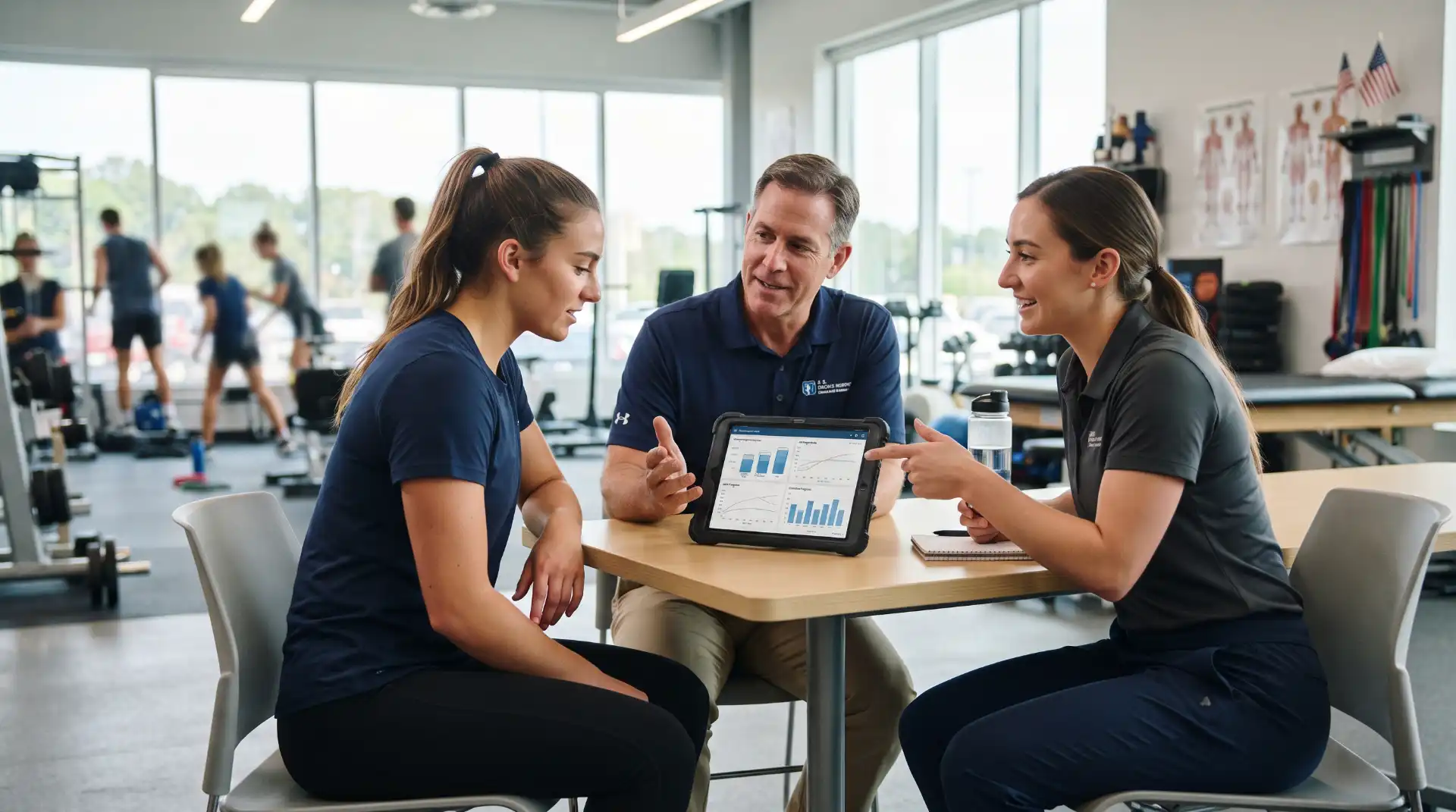
Return to sport is usually a shared process involving the athlete and healthcare team. Depending on the situation, that team may include a physician, surgeon, physical therapist, certified athletic trainer, strength coach, and sports psychologist.
The athlete provides essential information about symptoms, confidence, and responses to training. Clinicians contribute examination findings and test results. Coaches can describe sport demands and observe practice performance.
The final medical clearance should come from the appropriate licensed healthcare professional. Coaches, parents, teammates, or event schedules should not replace medical assessment.
The American Orthopaedic Society for Sports Medicine supports a multidisciplinary approach involving the athlete, physician, coach, athletic trainer, and physical therapist.
Clear communication is especially important when test results are mixed. An athlete may pass several strength measures but still have limited conditioning or confidence. The team can use those findings to create a more focused rehabilitation plan.
What Happens If an Athlete Does Not Pass?
Not meeting a return criterion is not necessarily a failure. It gives the athlete and rehabilitation team information about what needs further attention.
A strength deficit may lead to a more targeted resistance program. Poor landing mechanics may require additional neuromuscular training. Limited conditioning may call for a gradual increase in running or sport-specific work.
Testing can then be repeated after an appropriate period. Comparing results over time helps show whether the athlete is moving toward the required level.
Athletes should avoid training specifically to produce one good test score while ignoring broader readiness. The purpose is to build durable athletic capacity, not merely pass an isolated assessment.
A delayed return can be frustrating, particularly when a season or important event is approaching. However, returning before the body can tolerate sport demands may expose the athlete to pain, reduced performance, or another injury.
Limitations of Return to Sport Testing
No testing system can predict every future injury. Sport includes contact, unpredictable movements, playing surfaces, opponents, equipment, and fatigue that a clinic cannot reproduce completely.
Tests also differ in quality. Some have strong research support for a particular injury, while others rely more heavily on clinical judgment. A criterion used after ACL reconstruction may not apply to a shoulder dislocation or Achilles tendon rupture.
Limb symmetry can be useful but may hide weakness on both sides. A single testing day can also be affected by sleep, soreness, motivation, or unfamiliarity with the task.
For these reasons, return decisions should combine several forms of information. These include tissue healing, symptoms, clinical examination, objective performance, psychological readiness, practice tolerance, and the demands of the sport.
Testing reduces uncertainty. It does not eliminate it.
Questions Athletes Can Ask Before Returning
Athletes may benefit from discussing several issues with their healthcare team:
- Which physical abilities matter most for my injury and sport?
- What measurements are being used to assess my progress?
- Are my results being compared with my other side, baseline data, or sport-specific standards?
- How did my movement quality change when I became tired?
- What symptoms should cause me to stop or reduce activity?
- How should I progress from individual drills to full practice?
- When is repeat testing appropriate?
These conversations can help athletes understand that medical clearance is not merely a signature. It is one part of a structured transition back to athletic participation.
Building a Safer Return to Competition
A sound return plan connects rehabilitation, testing, practice, and competition. Each phase should prepare the athlete for the demands of the next one.
The process begins with healing and restoration of basic function. It advances through strength, power, balance, conditioning, and sport-specific movement. Objective testing identifies remaining deficits. Progressive practice examines whether the athlete can tolerate real training demands.
Athletes also need to communicate honestly about pain, swelling, instability, fatigue, and fear. Hiding symptoms to return for an important game can interfere with informed decision-making.
After competition resumes, maintenance training may remain valuable. Strength work, mobility exercises, neuromuscular drills, and workload monitoring can support continued participation.
Return to sport testing does not create a risk-free return. Its value lies in replacing assumptions with relevant clinical and performance information.
Frequently Asked Questions
When should return to sport testing begin?
Testing may occur at several points during rehabilitation. Early assessments establish current limitations. More demanding tests are introduced after the athlete develops adequate healing, strength, mobility, and control. The treating healthcare professional determines when each test is appropriate.
Is being pain-free enough to return to sport?
No. The absence of pain does not show whether the athlete has restored strength, power, endurance, movement control, or confidence. Pain-free daily activity also does not reproduce the demands of competition.
Does an athlete need perfect symmetry?
The appropriate standard depends on the injury, test, sport, and athlete. Clinicians often examine side-to-side symmetry, but they should also consider movement quality, baseline ability, sport norms, and absolute performance.
Can return to sport testing prevent another injury?
Testing can identify deficits and support a more informed return decision. It cannot guarantee that another injury may not occur. Athletic participation always carries some risk.
Can a coach perform return to sport testing?
Coaches may observe drills and help describe sport demands. Medical testing and clearance should be directed by qualified healthcare professionals familiar with the athlete’s injury and recovery.
Is return to sport testing only for professional athletes?
No. Youth, high school, college, recreational, and professional athletes may benefit from criteria-based assessment. The tests should match the athlete’s age, competitive level, injury, and sport.
Final Thoughts
Return to sport testing helps determine whether an athlete has regained the abilities needed for training and competition. A useful assessment examines more than pain or time since injury. It considers healing, mobility, strength, power, balance, movement quality, conditioning, confidence, and tolerance for sport-specific workloads.
No single score answers every question. The strongest decisions combine objective testing with clinical examination, the athlete’s experience, and performance during progressive practice.
Athletes recovering from a serious injury should discuss return criteria with their physician, physical therapist, or certified athletic trainer. A structured testing process can reveal remaining limitations and provide a clearer path from rehabilitation to athletic participation.
This article provides general educational information and does not replace individualized medical advice, diagnosis, treatment, or return-to-sport clearance.