
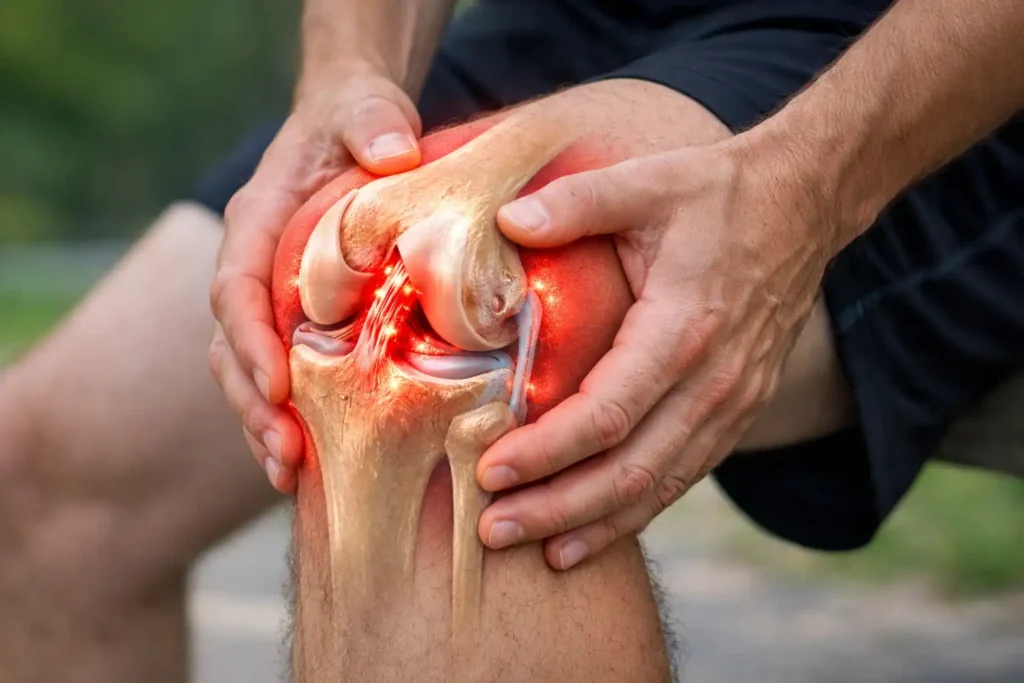
Anterior cruciate ligament (ACL) injuries are among the most common and devastating knee injuries in sports. They often require surgery and a long recovery process that can keep athletes out of play for months and sometimes jeopardize competitive careers. Female athletes — especially those participating in high‑impact sports like soccer, basketball, and volleyball — suffer ACL tears at notably higher rates than their male peers. Studies suggest female athletes sustain ACL injuries 2–8 times more often than males in similar sports settings, largely due to anatomical, neuromuscular, and biomechanical differences.
Because many ACL injuries occur without contact, prevention is a major focus in sports medicine. Evidence shows that structured neuromuscular training programs — incorporating strength, balance, landing technique, and agility work — can significantly reduce ACL injury risk. These programs have been associated with injury reductions up to 50‑88% when properly implemented.
In this comprehensive guide, we’ll explore what drives higher ACL injury risk in female athletes, explain the scientific evidence supporting prevention programs, and share actionable drills and warm‑ups that athletes, coaches, and trainers can use to protect knees and enhance performance.
 Why Female Athletes Are at Higher Risk
Female athletes face a disproportionate risk of ACL injuries for several reasons:
Biomechanical and Movement Patterns
Women tend to exhibit movement patterns that increase stress on the knee, including:
- Greater knee valgus (knees collapsing inward) during landing or cutting
- Reduced hamstring activation relative to quadriceps
- Upright landing mechanics rather than deep knee flexion
These patterns raise the strain on the ACL during dynamic actions.
Neuromuscular Control Differences
Female athletes often rely more on quadriceps and less on stabilizing muscle groups (like hips and hamstrings), which can reduce knee stability during rapid changes in direction.
Anatomical & Hormonal Considerations
Anatomical differences such as wider hips and knee alignment variations affect force distribution across the knee. Some researchers have examined the possible influence of hormones like estrogen on ligament laxity, but the evidence remains mixed.
These inherent risk factors don’t make injury inevitable but highlight areas where targeted training can create protective adaptations.
 Evidence‑Based Prevention: What Works
Scientific research has identified training components that consistently reduce ACL injury risk in female athletes:
Neuromuscular Training
Programs designed around neuromuscular control have shown the strongest evidence for reducing ACL injuries. When athletes perform structured training that teaches safer landing, cutting, and deceleration mechanics, injury rates drop significantly.
Key Elements Supported by Research
- Plyometric exercises — improve explosive strength and landing mechanics
- Balance and proprioception drills — enhance joint awareness
- Strength training — especially for hamstrings, glutes, and hips
- Agility and cutting drills — train sport‑specific movements
A systematic review found that neuromuscular training programs incorporating these elements reduced ACL injury incidence in female athletes by nearly half compared with no intervention
ACL Injury Prevention Warm‑Up Routine (10 minutes)
A consistent warm‑up routine should precede practices and games. Here’s a proven 10‑minute sequence that targets key risk factors:
1. Dynamic Hip Openers (1 min)
- Leg swings front‑to‑back & side‑to‑side
- Keeps hips mobile and prepares muscles for movement
2. Balance & Stability (2 min)
- Single‑leg balance with hip reach
- Progress to eyes closed or unstable surface
3. Jump & Land Drills (2 min)
- Two‑foot jump to single‑leg landing
- Coach cues: soft knees, hips back, eyes forward
4. Lateral Bounding (2 min)
- Side hops emphasizing control
- Push off outside leg and land balanced
5. Agility Cutting Practice (3 min)
- Short shuttle runs with 45‑90° cuts
- Start slow → increase speed only when technique is solid
Repeat this sequence 3 times per week to improve neuromuscular efficiency and reduce risky movement patterns.
 Strength & Conditioning for ACL Prevention
Strength training should complement technique drills and target muscle groups that support knee stability:
Hamstrings & Glutes
- Nordic hamstring curls
- Hip thrusts
- Romanian deadlifts
Core & Hip Strength
- Side planks with leg lifts
- Clamshells with resistance band
- Lateral walks with band
Balanced strength between hamstrings and quadriceps, and improved hip stability, correlates with reduced ACL loading.
Putting It All Together: Weekly Training Template
| Day | Warm‑Up | Strength | Skill Work |
|---|---|---|---|
| Mon | 10‑min ACL Warm‑Up | Hamstrings + Glutes | Agility Drills |
| Wed | 10‑min ACL Warm‑Up | Core & Hip Focus | Jump & Land Technique |
| Fri | 10‑min ACL Warm‑Up | Mixed Strength | Game‑Speed Cutting |
Consistency and quality of movement are key — not intensity alone. Even short sessions integrate protective training into athletes’ routines effectively.
Common Mistakes to Avoid
Avoid these errors to keep prevention programs effective:
- Skipping technique cues — e.g., letting knees cave inward
- Training volume without quality — poor mechanics reinforce injury patterns
- Inconsistent scheduling — prevention must be regular
Real‑world research shows that adherence and coaching quality are often more important than the specific drills themselves.
For Coaches & Parents: Implementation Strategies
Educate & Model
Teach correct form and reasoning behind drills. Athletes are more likely to buy in when they understand why they’re doing something.
Track Progress
Use video feedback or apps to monitor landing mechanics and movement quality.
Build Habit
Integrate warm‑ups into every practice to make injury prevention automatic.
By combining education, consistency, and evidence‑based exercises, teams can significantly reduce ACL injury rates over time.
Conclusion
ACL injury prevention in female athletes is not just theoretical — it’s actionable and effective. Evidence shows that neuromuscular training, strength work, and consistent technique coaching can reduce the risk of ACL tears by large margins. Female athletes, coaches, and parents should treat prevention as part of standard training, not an optional add‑on.