
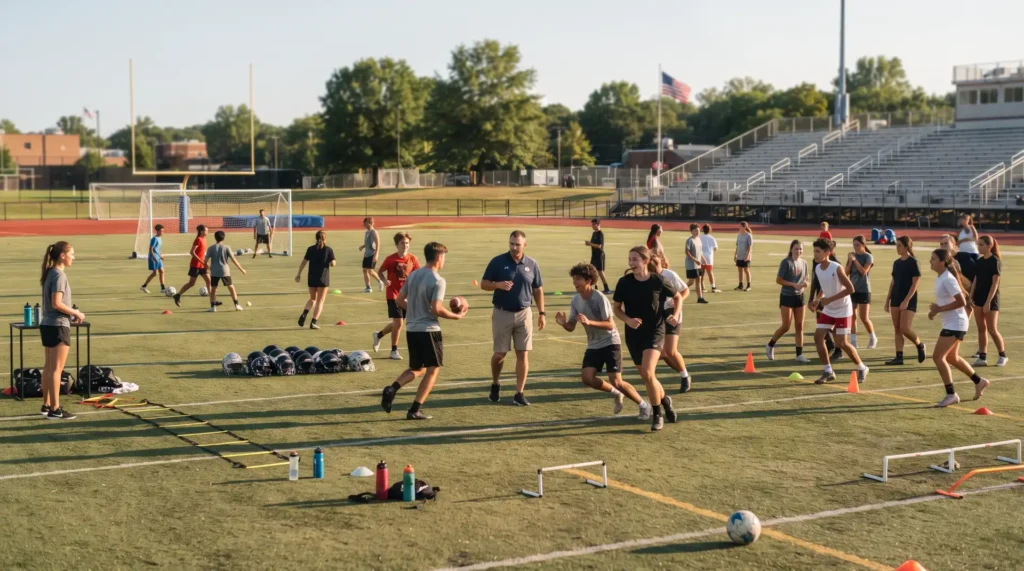
Sports camps give young athletes an opportunity to improve their skills, compete with other players, learn from experienced coaches, and prepare for upcoming school or club seasons. Across the United States, families enroll children and teenagers in football camps, basketball clinics, soccer academies, baseball programs, wrestling camps, gymnastics clinics, cheerleading programs, and other intensive athletic activities every year.
Although sports naturally involve some risk of injury, attending a sports camp does not necessarily mean an athlete or parent accepts every danger that could arise. A broken bone caused by ordinary contact during a properly supervised drill may present very different legal questions from an injury caused by a coach demanding dangerous exercises in extreme heat, allowing athletes to practice on a hazardous field, ignoring concussion symptoms, or failing to provide reasonable supervision.
When preventable conditions contribute to an injury, questions may arise about sports camp injury liability. Depending on the circumstances and the law of the state where the camp operates, potential responsibility may involve the camp operator, coaches, property owners, schools, universities, equipment providers, athletic organizations, or other parties.
This article explains some of the major liability issues surrounding sports camp injuries in the United States, including negligent coaching, unsafe facilities, inadequate supervision, heat illness, concussions, waivers, emergency preparedness, and the evidence that may become important after a serious accident.
When Is a Sports Camp Injury More Than an Ordinary Sports Risk?
Many sports involve unavoidable physical risks. Football players may collide. Basketball players may land awkwardly after jumping. Soccer players may be struck by a ball. Baseball players can be injured while sliding or attempting to catch a fly ball. Even when everyone follows appropriate procedures, injuries can occur.
For that reason, sports injury cases often distinguish between risks that are considered inherent in an activity and hazards created or increased by unreasonable conduct.
A camp usually cannot guarantee that an athlete will never be hurt. The more important issue is often whether the people responsible for operating the program acted reasonably under the circumstances.
For example, an athlete who sprains an ankle during an ordinary supervised basketball drill may have encountered a normal risk of the sport. The analysis could change if the athlete stepped into a large unrepaired hole on a court that camp staff knew about and failed to address.
Similarly, getting tackled during a properly conducted football drill is different from a coach intentionally creating an unsafe full-contact drill without appropriate protective equipment or pairing athletes with dramatically different sizes and experience levels in circumstances that create an unreasonable danger.
Liability therefore tends to depend heavily on how the injury happened rather than simply on the fact that the athlete was participating voluntarily.
The Duty of Care at a Sports Camp
Sports camps generally have responsibilities toward the athletes participating in their programs. The exact legal duties vary by jurisdiction, the age of the athlete, the sport involved, the relationship between the parties, and whether the camp is privately operated, school-sponsored, nonprofit, municipal, or connected with another organization.
In a typical negligence claim, the injured person may need to establish that the defendant owed a duty of care, failed to act with reasonable care, and that the failure was a substantial or legal cause of the resulting injury and damages.
Reasonable safety measures at an athletic camp may include qualified supervision, appropriate instruction, properly maintained facilities, suitable equipment, emergency procedures, heat precautions, concussion protocols, and rules designed for the age and ability of the athletes.
Our related guide on legal considerations for coaches and sports organizations discusses how supervision, equipment, facility conditions, emergency planning, and athlete monitoring can affect injury risks.
Negligent Coaching Can Create Serious Injury Risks
Coaches are often responsible for deciding what athletes do, how difficult drills become, how frequently players rest, whether injured athletes continue participating, and when practice conditions have become unsafe.
Good coaching requires more than teaching technique. Coaches working with children and teenagers may also need to recognize foreseeable safety risks and adapt activities appropriately.
Potential negligent coaching allegations can arise when a coach uses drills that are unreasonably dangerous for the athletes involved, fails to provide proper instruction before a difficult activity, ignores obvious fatigue or injury symptoms, pressures injured athletes to continue, permits dangerous conduct between participants, or fails to enforce safety rules.
Age and skill level can be particularly important. A drill appropriate for experienced varsity athletes may not be reasonable for elementary-school children attending an introductory camp. Likewise, athletes participating in their first day of contact practice may require different preparation than experienced players who have already completed a structured conditioning program.
Sports camp organizers should therefore consider whether instruction is appropriate for participants rather than simply copying training methods used for elite or adult athletes.
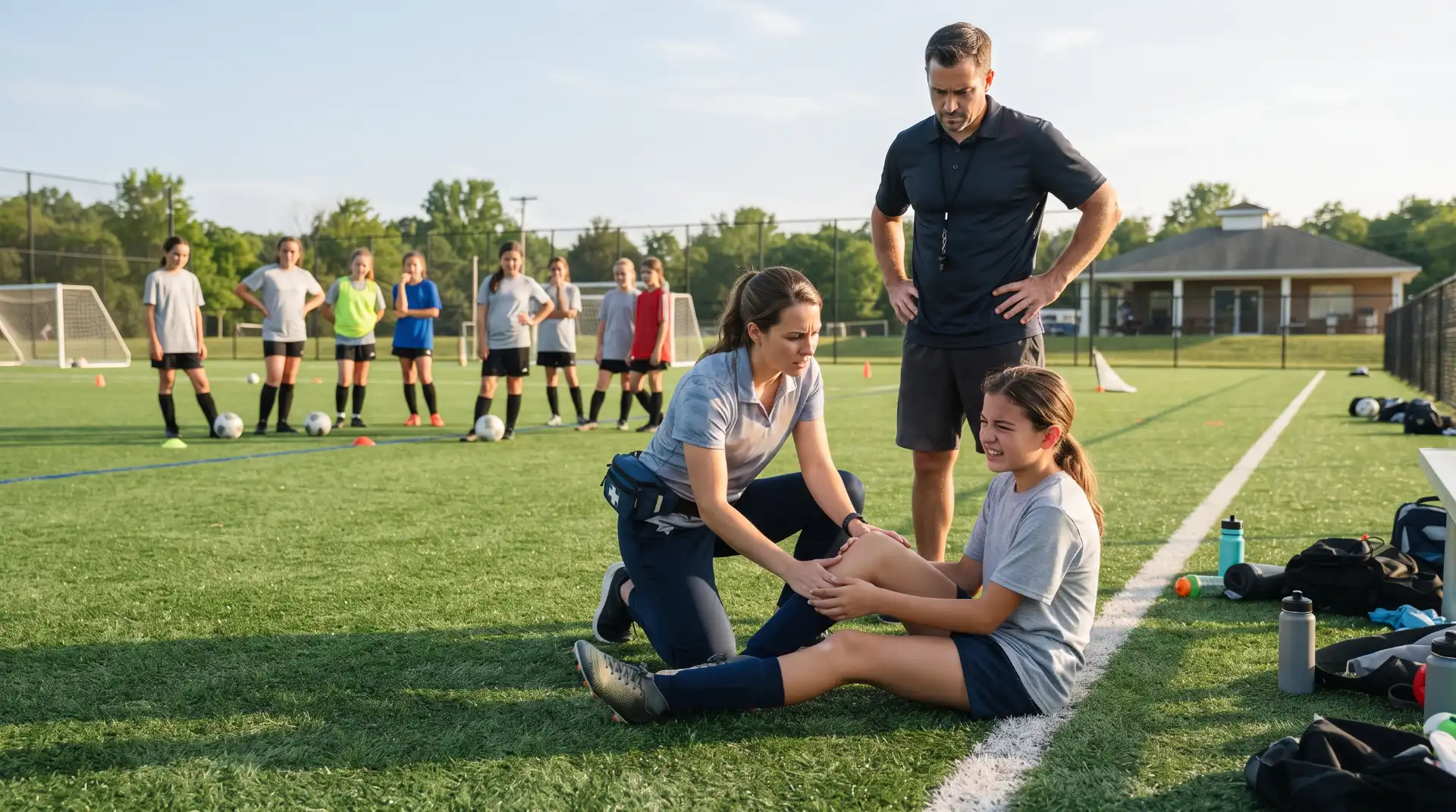
Dangerous Drills and Training Methods
Some of the most serious coaching-related questions arise when intensity is prioritized over safety.
Conditioning exercises may become dangerous when athletes are required to continue despite heat stress, dizziness, unusual confusion, severe fatigue, breathing difficulty, or other warning signs. Contact drills may become unsafe when coaches fail to use appropriate protective equipment or permit excessive collisions that provide little training benefit.
Strength and conditioning sessions can also produce preventable injuries if inexperienced athletes are instructed to perform exercises without adequate instruction, spotting, progression, or rest.
A demanding practice is not automatically negligent. Competitive sports often involve strenuous training. The legal question generally becomes whether the coach’s conduct fell below the applicable standard of reasonable care under the circumstances.
Heat Illness Is a Major Summer Camp Safety Concern
Summer sports camps frequently take place during some of the hottest weeks of the year. Athletes may be training outdoors for several hours per day while wearing uniforms, helmets, pads, or other equipment that can increase heat retention.
Heat-related illness can range from heat cramps and heat exhaustion to life-threatening exertional heat stroke. Risk management involves much more than simply placing a water cooler beside the field.
Coaches and camp administrators should consider temperature, humidity, activity intensity, protective equipment, athlete conditioning, acclimatization, rest periods, access to shade, and individual signs that a participant is struggling.
The National Federation of State High School Associations has emphasized heat acclimatization, hydration, environmental monitoring, emergency action planning, and modifying or stopping practices when weather conditions become unsafe. Those principles can also provide useful safety guidance for youth sports programs and camps.
Potential liability questions may arise if camp personnel ignore dangerous temperatures, restrict reasonable access to water, punish athletes for requesting breaks, fail to respond to heat-illness symptoms, or continue strenuous outdoor sessions despite clearly hazardous conditions.
Concussions Require Prompt Recognition and Response
Concussions are another significant concern at football, soccer, basketball, lacrosse, cheerleading, wrestling, hockey, gymnastics, and other camps where athletes may fall, collide, or experience impacts to the head or body.
A concussion is a traumatic brain injury that can result from a bump, blow, or jolt to the head or from a hit to the body that causes rapid movement of the head and brain.
Symptoms are not always dramatic. An athlete may remain awake and continue talking after an impact while experiencing headache, dizziness, confusion, balance problems, memory difficulties, sensitivity to light, slowed responses, or simply reporting that something does not feel right.
For current concussion education, coaches and parents can review the CDC HEADS UP youth sports resources, which provide guidance on recognizing, responding to, and reducing the risk of concussion and other serious brain injuries.
A camp may face difficult liability questions when personnel see a significant collision but fail to evaluate the athlete, dismiss concussion symptoms, encourage a participant to “play through it,” or permit a potentially concussed athlete to return to activity without following applicable medical and legal requirements.
Return-to-play requirements vary by state and by the type of athletic organization involved. Camps should understand the concussion laws, governing-body rules, and medical protocols applicable where they operate rather than assuming one policy applies nationwide.
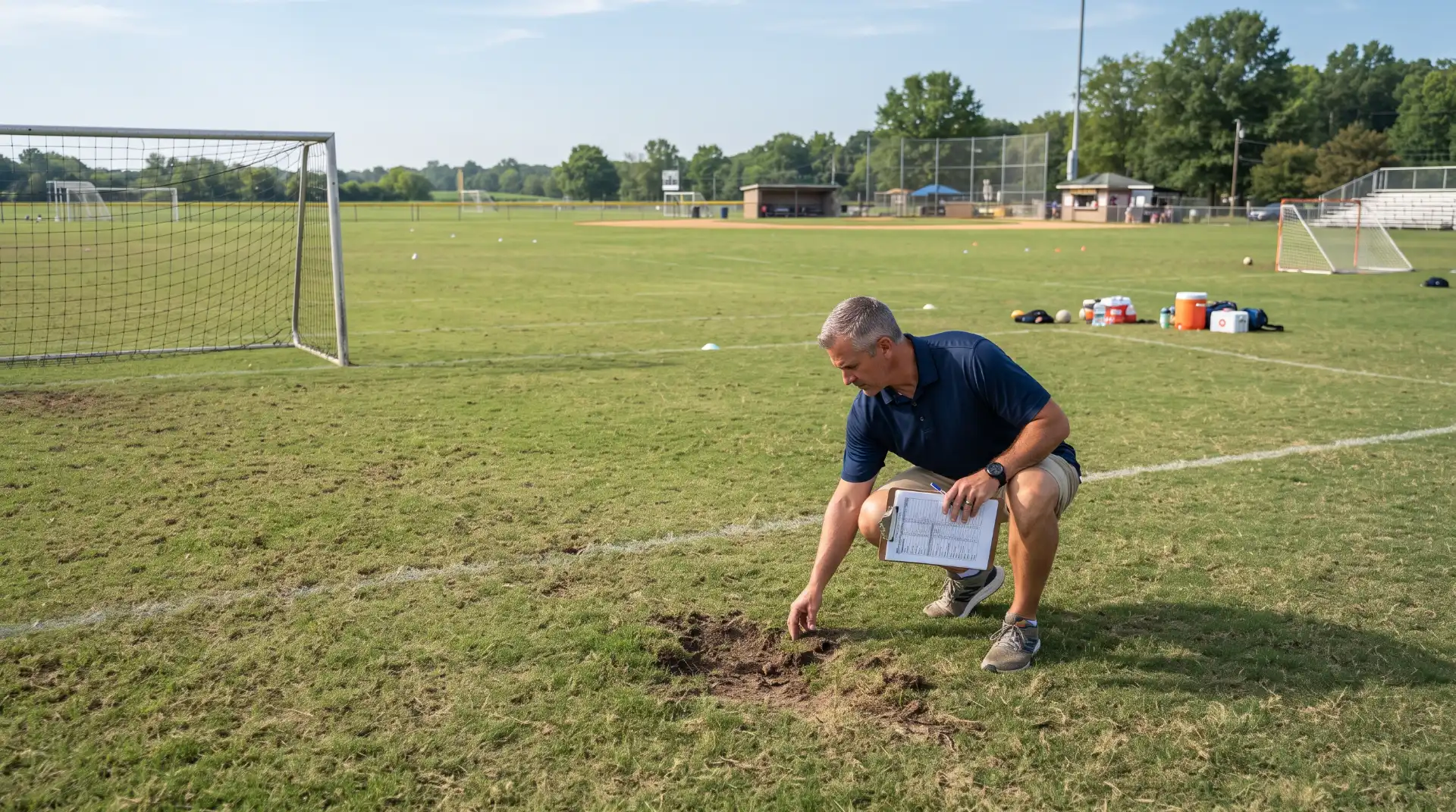
Unsafe Fields, Courts, Gyms, and Facilities
Not every sports camp injury begins with a coaching decision. The physical condition of the property itself may contribute to an accident.
Hazards can include holes or depressions in playing surfaces, loose flooring, damaged bleachers, exposed metal, improperly secured goals, broken fences, poor lighting, wet gym floors, defective batting cages, improperly padded walls, unstable training equipment, and dangerous obstacles located too close to active play.
Camp administrators and property operators may reduce risk by conducting reasonable inspections before activities begin and responding promptly when dangerous conditions are identified.
Consider a soccer goal that has not been properly secured. If the goal tips over and seriously injures an athlete, the resulting case may involve questions about who installed the equipment, who inspected it, who controlled the field, whether prior problems had been reported, and whether recognized safety procedures were followed.
A similar analysis could apply to a basketball player who falls because of a known water leak on an indoor court or a runner injured by a hole that had remained unrepaired despite earlier complaints.
These situations can raise premises liability issues in addition to ordinary sports negligence.
Inadequate Supervision at Youth Sports Camps
Supervision is particularly important when children are participating in high-energy activities away from their parents.
A camp may have dozens or even hundreds of athletes spread across different fields, gyms, dormitories, swimming areas, transportation vehicles, or training stations. Having coaches present somewhere on the property does not necessarily mean every activity is adequately supervised.
Relevant questions after an injury may include how many athletes were assigned to each coach, whether staff members were actually watching the activity, whether children were permitted to use equipment without instruction, whether athletes were separated appropriately by age and size, and whether camp administrators knew about prior dangerous behavior.
For example, unsupervised wrestling, tackling, weightlifting, trampoline use, swimming, or climbing activities can expose younger athletes to risks they may not be equipped to manage independently.
Supervision becomes even more important when camp organizers know that athletes are inexperienced or when an activity involves specialized equipment.
Defective or Improper Sports Equipment
Sports camps may provide helmets, pads, bats, goals, nets, tackling equipment, weight-training machines, gymnastics apparatus, protective mats, or other athletic gear.
Equipment can contribute to an injury when it is defective, poorly maintained, incorrectly assembled, inappropriate for the athlete, or used contrary to its intended purpose.
An injury involving equipment can potentially involve more than one party. Depending on the facts, responsibility could be investigated regarding the manufacturer, distributor, property owner, maintenance contractor, camp operator, coach, or another organization.
Records showing when equipment was purchased, inspected, repaired, replaced, or reported as damaged may become important in determining what happened.
Emergency Action Plans Matter When Serious Injuries Occur
Even well-run sports programs cannot eliminate every emergency. Because injuries and medical events are foreseeable in athletics, preparation can make a major difference in how quickly an athlete receives help.
An emergency action plan typically addresses who contacts emergency medical services, who provides immediate care, where emergency equipment is located, how responders access the facility, how parents or guardians are contacted, and which staff members have designated emergency responsibilities.
The usefulness of a plan depends on whether staff understand it and can implement it. A document stored in an office may provide little protection if coaches have never reviewed or practiced the procedures.
Automated external defibrillators, first-aid equipment, cooling supplies, communication devices, and emergency access routes should also be considered based on the setting and applicable standards.
When a serious injury occurs, delays caused by confusion, unavailable equipment, lack of communication, or failure to seek appropriate medical assistance may become relevant to a later investigation.
Can a Sports Camp Waiver Prevent an Injury Lawsuit?
Parents are often asked to sign liability releases, assumption-of-risk forms, medical authorizations, and participation agreements before a child attends camp.
These documents can matter, but signing a waiver does not provide a simple nationwide answer to whether an injury claim can proceed.
Waiver law varies significantly by state. Courts may consider the wording of the document, the type of conduct involved, public policy, the identity of the participant, and special rules affecting minors. Some jurisdictions restrict the ability of parents to release certain claims belonging to children, while other jurisdictions may enforce particular recreational releases under specified circumstances.
Claims involving reckless or grossly negligent behavior may also be treated differently from claims involving ordinary negligence.
For a broader discussion, see our article explaining the role of waivers in athletic injury lawsuits.
Because these rules are state-specific, injured athletes and parents should avoid assuming that a signed camp form automatically eliminates every legal option.
Assumption of Risk Does Not Necessarily Cover Every Hazard
Assumption of risk is another common issue in sports injury cases. The doctrine recognizes that people who voluntarily participate in athletics may accept certain dangers that are inherent in the activity.
A baseball player understands that a pitched ball may strike a batter. A soccer player understands that incidental physical contact can occur. A basketball player knows another player may accidentally step on a foot during competition.
But an athlete’s acceptance of ordinary sports risks is not necessarily the same as accepting hidden facility defects, reckless coaching practices, dangerously defective equipment, or unreasonable failures to respond to medical emergencies.
The precise legal effect of assumption of risk differs by jurisdiction. Some states apply comparative negligence principles, some recognize specialized sports doctrines, and others analyze particular recreational injuries under different standards.
That is why the factual cause of an accident is so important.
Who Could Potentially Be Responsible for a Camp Injury?
A sports camp injury does not always involve a single potential defendant.
The camp operating company may be responsible for program policies and staffing. Individual coaches may have direct responsibility for instruction and supervision. A school, university, municipality, private facility, or property company may control the field or building. An outside contractor may maintain equipment. A manufacturer could become relevant if defective equipment contributed to the injury.
In some cases, multiple organizations jointly operate a camp. A college may provide the facilities while an outside company manages registration and staffing. A famous coach may license a name to a camp operated by another entity. Medical services may be provided by an independent organization.
Understanding these relationships often requires reviewing contracts, registration documents, insurance information, ownership records, staffing agreements, and communications between the organizations.
Public Schools and Government-Operated Camps Can Involve Special Rules
Families should also recognize that injury claims involving public schools, parks departments, municipalities, or other government entities may be subject to special procedural requirements.
Governmental immunity rules and claim-presentation deadlines vary substantially across the United States. In some jurisdictions, a person may need to provide formal notice of a claim much sooner than the ordinary statute of limitations for a personal injury lawsuit.
Missing an applicable governmental deadline can affect legal rights even when the injured person would otherwise have a potentially valid negligence claim.
For that reason, identifying every organization involved in the sports camp can be important early in the process.
Evidence That May Matter After a Sports Camp Injury
Sports environments can change rapidly after an accident. A damaged piece of equipment may be repaired. A wet floor may dry. A hole may be filled. Videos may be overwritten. Coaches and athletes may remember events differently after time passes.
When appropriate, evidence may include photographs of the accident location, photographs of equipment, registration materials, liability waivers, camp advertisements, written safety policies, emails, text messages, medical records, witness information, training schedules, weather records, video footage, incident reports, and communications with camp personnel.
Witnesses can be especially important because other athletes, parents, assistant coaches, athletic trainers, or spectators may have observed conditions leading up to the injury.
For example, teammates may remember an athlete repeatedly telling a coach that they felt dizzy before collapsing. Parents may have photographed a damaged field earlier in the day. Other campers may recall that protective equipment was unavailable or that a dangerous drill had been conducted repeatedly.
Preserving these details can help clarify whether an accident resulted from an inherent sports risk or a preventable safety failure.
Medical Documentation Can Help Explain the Injury
Prompt medical evaluation is important first and foremost for the athlete’s health. It can also establish a contemporaneous record of symptoms, diagnosis, treatment recommendations, and activity restrictions.
Some athletic injuries do not reveal their full severity immediately. Concussion symptoms can evolve after the initial impact. Ligament injuries may become more painful after swelling develops. Stress injuries can worsen when an athlete continues training.
Families should follow medical recommendations and avoid allowing pressure from coaches, tournaments, recruiting opportunities, or competition schedules to override appropriate recovery.
A documented return-to-play process may also help prevent a second injury before the athlete has recovered.
Parents Can Ask Safety Questions Before Camp Begins
Families cannot control every risk, but asking questions before enrollment can provide useful information about a camp’s approach to athlete safety.
Parents may want to understand who supervises each training group, whether staff members have relevant coaching qualifications, what happens when an athlete reports an injury, how the program handles concussions, whether an athletic trainer or medical professional is available, and what procedures apply during extreme heat or severe weather.
Families can also review what insurance coverage the camp expects participants to have and what medical authorization forms permit camp staff to do during an emergency.
None of these questions guarantees that an accident will not occur. They can, however, help parents compare programs based on more than coaching reputation or competitive opportunities.
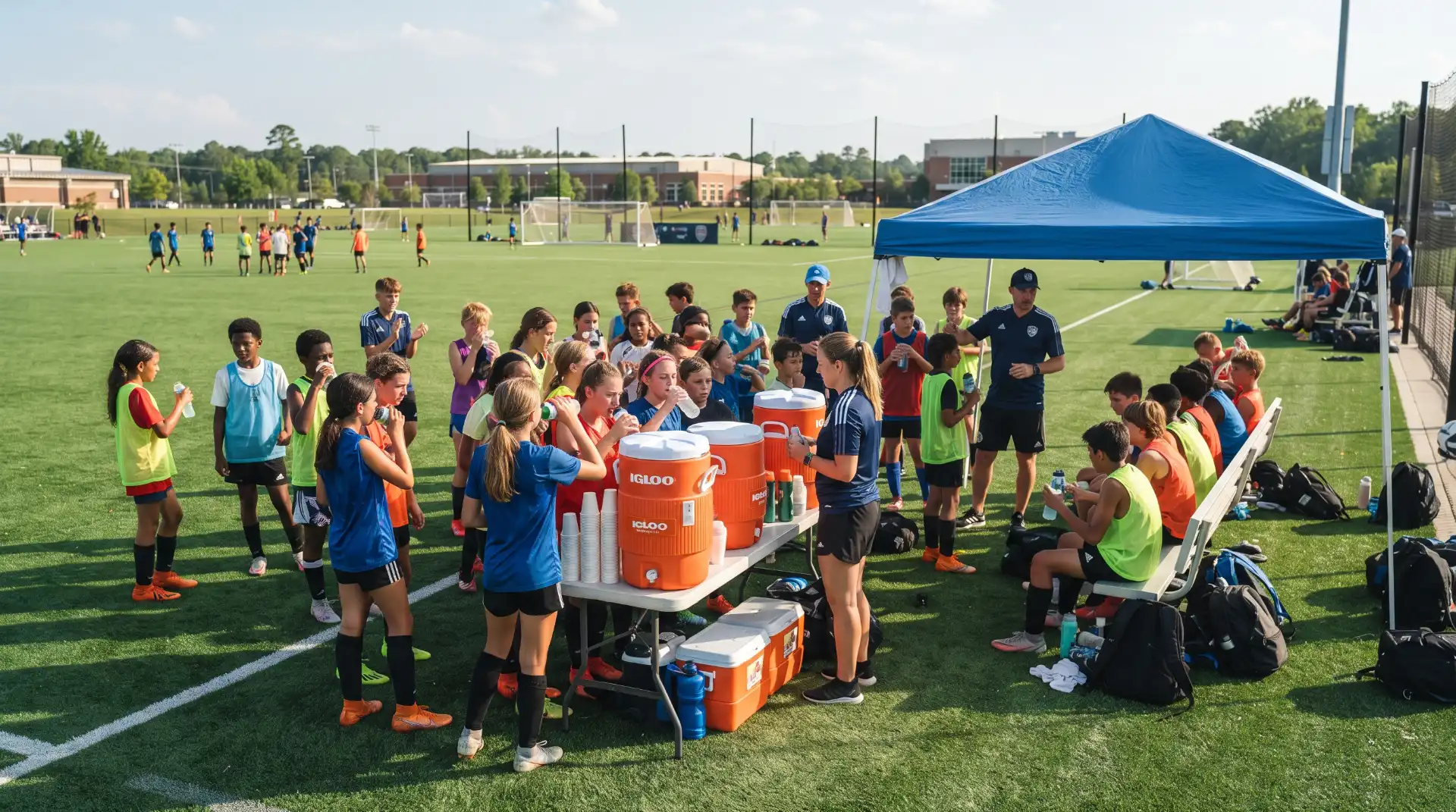
How Sports Camps Can Reduce Preventable Injuries
Effective injury prevention usually depends on a system rather than a single rule.
Camp operators can begin by hiring qualified personnel, establishing realistic coach-to-athlete ratios, inspecting facilities, maintaining equipment, developing emergency procedures, and providing staff education before athletes arrive.
Coaches should encourage athletes to report symptoms rather than creating a culture where injuries are treated as weakness. Training schedules should account for heat, conditioning level, recovery time, and the cumulative physical demands of multiple daily sessions.
Drills should have a legitimate training purpose and should be adapted to age, size, experience, and equipment availability. Staff should also have clear authority to stop activity when lightning, excessive heat, poor air quality, damaged facilities, or another hazard makes continued participation unsafe.
These measures cannot eliminate the natural risks associated with competitive sports, but they can reduce unnecessary dangers created by poor planning or preventable safety failures.
When a Serious Sports Camp Injury May Warrant Further Investigation
Not every sports camp injury is evidence of negligence. Athletes can be hurt even when coaches and organizations behave responsibly.
Further investigation may be appropriate, however, when circumstances suggest that an injury resulted from something beyond the normal risks of athletic participation.
Examples could include a coach ignoring obvious medical distress, an athlete being forced to continue after reporting an injury, dangerous training in extreme heat without adequate precautions, a known field defect left unrepaired, broken equipment remaining in use, inadequate supervision of high-risk activities, or an unreasonable delay in obtaining emergency medical assistance.
The analysis becomes especially important when injuries involve traumatic brain injury, spinal trauma, serious fractures, organ damage, permanent impairment, hospitalization, or substantial long-term medical treatment.
Sports Camp Injury Laws Differ Across the United States
Sports injury liability is not governed by one nationwide negligence rule. State law can affect assumption of risk, comparative fault, waiver enforceability, parental releases, premises liability, damages, filing deadlines, and claims involving government entities.
The same accident occurring at a private soccer camp in Florida, a public-school football camp in California, or a university basketball camp in New York could raise different legal issues.
Families reviewing an injury should therefore focus on the law of the state where the incident occurred and the specific organizations involved.
Conclusion
Sports camps can provide valuable training and memorable experiences for young athletes, but competitive training should not come at the expense of reasonable safety.
Some injuries are unavoidable parts of athletics. Others may result from negligent coaching, unsafe facilities, defective equipment, inadequate supervision, dangerous heat exposure, ignored concussion symptoms, or failures in emergency planning.
Determining whether a camp may be legally responsible requires examining how the injury occurred, what risks were inherent in the sport, what the camp and coaches knew or should reasonably have known, what precautions were available, what agreements were signed, and how the relevant state’s law treats sports injury claims.
For athletes and families, understanding these distinctions can help separate an unfortunate sports accident from an injury that may have resulted from a preventable safety failure.
This article provides general educational information about sports camp injuries in the United States and is not legal advice. Laws and procedural requirements vary by state and by the circumstances of each incident.