
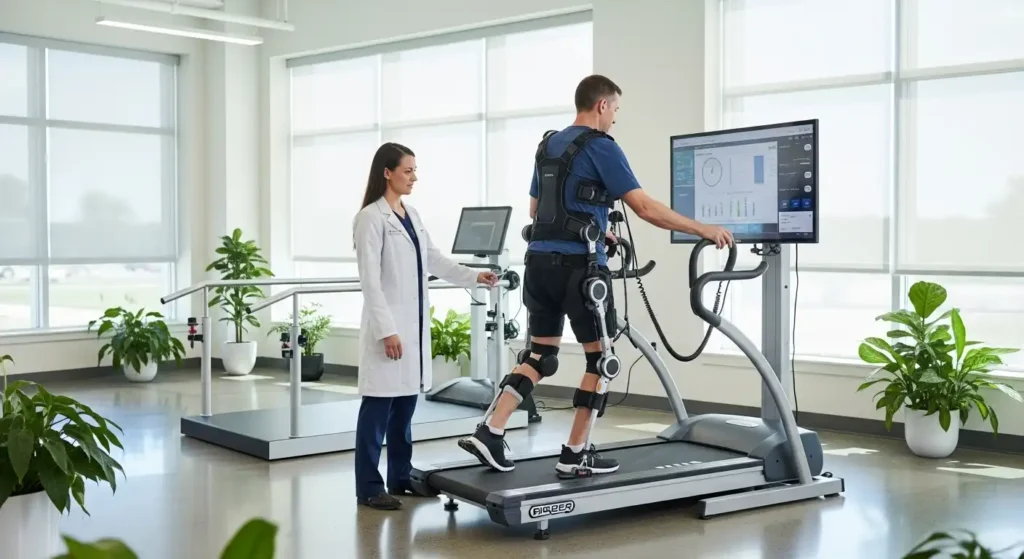
The field of rehabilitation has experienced dramatic advancements in recent years, particularly with the introduction of robotic-assisted therapy. This innovative approach combines robotics with cutting-edge technology to create personalized, precise, and highly effective recovery methods. This article explores the evolution of robotic-assisted rehabilitation, the technologies behind it, and its significant impact on recovery times, particularly for athletes and individuals recovering from serious injuries.
As athletes and patients look for more effective ways to recover from injuries, robotic-assisted rehabilitation is emerging as a transformative tool. From robotic exoskeletons that assist with walking to robotic arms that aid in upper limb recovery, these systems are not only changing the way rehabilitation is approached but are also drastically reducing recovery times and improving outcomes.
What is Robotic-Assisted Rehabilitation?
Robotic-assisted rehabilitation is the use of robotic devices to assist patients in recovering motor functions following injury, surgery, or neurological conditions. These robots are designed to help guide, augment, or replace human movement, promoting neural recovery and improving rehabilitation outcomes. These devices are particularly useful in repetitive motion therapies, as they can provide consistent and precise movements to aid recovery.
The primary goal of robotic rehabilitation is to speed up recovery while ensuring the treatment is as effective as possible. They help patients who have lost the ability to move their limbs or body due to injury or illness, providing them with a new level of independence and mobility.
How Does Robotic-Assisted Rehabilitation Work?
Robotic-assisted rehabilitation utilizes several technologies that are tailored to the specific needs of patients. These technologies work by providing repetitive, controlled movements to restore motor function. Below are some of the key technologies used in robotic rehabilitation.
 1. Exoskeletons
Exoskeletons are wearable robotic devices that assist with walking and other lower-limb movements. These devices are particularly beneficial for patients who suffer from paralysis, stroke, or severe musculoskeletal injuries. By using sensors and motors, exoskeletons assist in movement, allowing the user to regain mobility and strength over time.
Exoskeletons are designed to help patients walk with better posture, more stability, and less effort. They assist with movement by supporting and augmenting the patient’s natural gait pattern.
2. End-Effector Systems
These robotic systems are used for upper and lower limb rehabilitation. End-effector robots work by guiding the patient’s limbs through specific motions, such as walking or arm movements, to aid in recovery. One of the main applications for end-effector systems is gait training, which involves the patient moving their legs with the robot’s assistance to retrain walking patterns.
End-effector systems offer a safe and efficient way to target specific muscle groups that require strengthening, offering controlled and consistent therapy.
 3. Telemanipulators
Telemanipulators are robotic arms that can be controlled remotely by a therapist. These robots allow for precise manipulation of the patient’s limbs, providing therapeutic movements that can help improve strength, flexibility, and mobility. The telemanipulator system is often used in a clinical setting, where therapists can guide the patient’s limb through specific exercises while observing the progress in real time.
4. Virtual Reality (VR) and Augmented Reality (AR) Integration
Combining robotic devices with virtual reality and augmented reality has been a breakthrough in rehabilitation. These systems provide a highly engaging and motivating environment for patients. Virtual reality can simulate real-life scenarios that encourage patients to perform movements that they might otherwise avoid due to fear of injury or pain.
For example, a patient recovering from knee surgery may practice walking on a virtual hiking trail using a robotic device that supports their movement. This immersive experience has been shown to enhance recovery by making the rehabilitation process more engaging and motivating.
Benefits of Robotic-Assisted Rehabilitation
The integration of robotics in rehabilitation provides a range of benefits that make it a preferred choice for many patients and healthcare professionals. These include:
1. Enhanced Precision and Consistency
Robotic devices can perform movements with high precision and consistency, which is essential in rehabilitation. Unlike human therapists, robots are not limited by fatigue and can perform repetitive exercises with exact accuracy, ensuring optimal outcomes for patients. This precision ensures that patients receive the most effective therapy, which may otherwise be difficult to achieve with manual interventions.
2. Increased Rehabilitation Intensity
Robotic rehabilitation systems can deliver intensive therapy that might be challenging for human therapists to replicate. For instance, robotic devices can provide more hours of therapy per day, enabling patients to undergo repetitive movements for longer durations without strain or risk of injury. This intensity helps speed up the recovery process, making it possible for patients to see improvements more quickly.
3. Personalization of Therapy
Many robotic systems come equipped with software that allows healthcare providers to customize therapy programs for each patient. Based on the individual’s physical condition and recovery goals, the robot’s movements can be adjusted to ensure the most effective therapy. These systems also track progress and can adjust the intensity and type of therapy based on real-time data.
4. Reduced Rehabilitation Time
One of the key advantages of robotic-assisted rehabilitation is that it can shorten recovery times. The consistent, intensive, and precise therapy provided by robotic systems allows patients to recover faster compared to traditional manual therapy. This has been especially beneficial for athletes who need to return to their sport in a timely manner.
5. Lower Risk of Injury
Rehabilitation often involves repetitive movements that can result in secondary injuries, especially when performed incorrectly. Robotic systems eliminate this risk by ensuring that movements are controlled and precise. By minimizing the chance of re-injury, robotic-assisted rehabilitation offers a safer alternative to traditional recovery methods.
Real-World Applications of Robotic Rehabilitation
Robotic-assisted rehabilitation has already been proven to be effective in various real-world settings. Below are some key examples where robotic devices are making a difference:
1. Spinal Cord Injury (SCI) Recovery
Patients with spinal cord injuries (SCI) have shown significant improvement through the use of robotic exoskeletons. These devices assist with movement by providing the support needed for patients to regain the ability to walk. Studies have demonstrated that exoskeletons can improve muscle strength, reduce spasticity, and enhance walking abilities.
 2. Stroke Rehabilitation
Stroke patients, particularly those with hemiplegia (paralysis on one side of the body), benefit greatly from robotic-assisted rehabilitation. Robotic devices help restore arm and hand functionality, enabling patients to regain basic motor skills that are critical for daily tasks. By facilitating repetitive arm movements, these systems enhance neuroplasticity, the brain’s ability to reorganize and form new connections.
3. Orthopedic Recovery
Athletes recovering from orthopedic injuries such as ACL tears, shoulder rotator cuff injuries, and hip replacements are also using robotic-assisted therapy. These systems help accelerate the recovery process by providing targeted rehabilitation that can improve joint mobility and muscle strength while reducing recovery time.
Challenges and Considerations
Despite the numerous benefits, there are some challenges that come with the use of robotic-assisted rehabilitation. These include:
1. High Cost
The cost of robotic devices can be a significant barrier to widespread adoption. These systems are expensive to manufacture and maintain, which can limit their availability to patients in certain healthcare systems or regions. Additionally, insurance coverage for robotic rehabilitation is not always comprehensive.
2. Limited Accessibility
Because these devices are often found in specialized rehabilitation centers, access to robotic-assisted rehabilitation may be limited to patients who live near these facilities. Patients in rural or underserved areas may face challenges in accessing this technology.
3. Patient Resistance
Some patients may initially resist using robotic devices due to unfamiliarity or discomfort. It may take time for patients to adapt to the sensation of robotic assistance, especially for those who have experienced traumatic injuries or who may have psychological barriers to rehabilitation.
4. Training for Healthcare Providers
Therapists and healthcare providers need specialized training to use robotic-assisted systems effectively. This requires investment in training and education to ensure that the devices are used properly to maximize patient outcomes.
The Future of Robotic-Assisted Rehabilitation
The future of robotic rehabilitation looks promising, with ongoing advancements expected to improve the technology even further. Some of the exciting developments include:
1. Integration with AI
As artificial intelligence (AI) continues to evolve, robotic rehabilitation systems will become even smarter. AI can be used to monitor patient progress in real time, adjust therapy based on the patient’s condition, and make recommendations for personalized rehabilitation programs.
2. Home-Based Robotic Therapy
The future of robotic rehabilitation will likely include systems that can be used at home. With advancements in tele-rehabilitation, patients will be able to use robotic devices in their own homes, with remote supervision from their therapists. This will make rehabilitation more accessible and convenient for a larger number of patients.
3. Expanded Applications in Other Fields
While most robotic rehabilitation technology has focused on stroke, spinal cord injury, and orthopedic recovery, these systems could soon be used for other types of rehabilitation. Applications for neurological disorders such as Parkinson’s disease, cerebral palsy, and traumatic brain injuries are on the horizon.
Conclusion
Robotic-assisted rehabilitation is revolutionizing the way we approach injury recovery, offering athletes and patients alike a faster, more efficient, and personalized path to recovery. With continued advancements in technology, these systems are expected to become even more effective, providing more accessible care and improving patient outcomes.